
 English
 简体中文

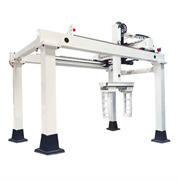
In modern industrial production systems, gantry cranes, with their unique structural advantages and flexible adaptability, serve as key equipment for connecting different production processes and enhancing efficiency. Their applications permeate multiple core areas of manufacturing, reshaping traditional production models with precision, stability, and high efficiency.
High-precision assembly
In the field of precision manufacturing, gantry robots, with their rigid frames and multi-axis linkage systems, can perform operations with micron-level accuracy. Whether it's inserting electronic components, assembling optical lenses, or achieving precise alignment in medical devices, their repeat positioning accuracy can reach within ±0.02mm. This characteristic makes them an efficient alternative to manual labor, particularly in environments requiring prolonged stable operation, where the reliability of the robots far surpasses human limits.
Heavy Material Handling
For the heavy workpiece handling needs in industries such as automotive manufacturing and aerospace, the gantry manipulator achieves an operational range spanning dozens of meters through modular design. With load capacities ranging from hundreds of kilograms to several tons, it can be equipped with diverse end-effectors like vacuum suction cups or electromagnetic fixtures to automate the transportation of engine cylinder blocks, large molds, or aircraft skins. This capability not only reduces safety risks associated with manual handling but also optimizes production cycle times by seamlessly integrating with logistics systems.
Multi-process integration
In complex product manufacturing, truss-type robotic arms often serve as the core unit of flexible production lines. By quickly changing fixtures or adjusting motion trajectories, they enable seamless transitions between different processes. For instance, in the metalworking field, robotic arms can sequentially perform full-process operations such as workpiece gripping, loading, machining, inspection, and unloading without requiring production interruptions for equipment modifications. This flexibility allows a single production line to accommodate multiple product models, significantly improving equipment utilization and production adaptability.
Harsh environment
Faced with extreme working conditions such as high temperatures, dust, radiation, or severe corrosion, truss robotic arms demonstrate an adaptability unmatched by humans. In foundry workshops, their fully enclosed structure resists molten metal splashes; in the chemical industry, corrosion-resistant coatings enable continuous operation in acidic environments; in nuclear facility maintenance, remotely operated robotic systems serve as critical equipment for ensuring personnel safety. These features make them vital tools for expanding human operational boundaries.
Quality control
By integrating sensor systems such as visual recognition and force feedback, the gantry manipulator can monitor key parameters in real-time during operation. In assembly processes, it can detect whether the clearance between parts meets tolerance requirements; in welding operations, it can assess weld quality through current fluctuations; and in packaging workflows, it can automatically remove products with abnormal weight or dimensions. This data-driven quality control method provides objective and traceable assurance for the production process.


